Congress's Anti-Scam Bill Labels Cannabis Ads 'High-Risk,' in the Same Clause as Alcohol
Amy Deneson's Cannabis Media Council says H.R. 10433 lumps licensed dispensaries in with crypto. The bill's real pressure lands on platforms with 100,000 users: heavier vetting, three-year records, and FTC, state and private lawsuits that Section 230 would not block.
On Oct. 13, in New York, Amy Deneson put out the fourth edition of a rulebook nobody had required her industry to write. Full Spectrum, the Cannabis Media Council's guidelines for responsible cannabis advertising, had been around since 2023. Edition IV added something new: a proposed Cannabis Advertising Code, a short list of commitments to reach only adults of legal age, make only truthful and substantiated claims, and portray consumption responsibly. (S1)
The timing was deliberate. Deneson, the council's executive director and co-founder, has spent a decade marketing cannabis for Curio Wellness, Vireo Health, Curaleaf and others in more than 30 U.S. markets, in an industry where, by her council's count, most marketers have had an account shut down or ads canceled at least once. Four weeks before the release, a bipartisan pair of lawmakers had introduced a bill that would make that harder. "We share Congress's goal of protecting seniors from online scams," she said in the council's announcement. "But licensed cannabis operators aren't the scam; they're the safe, tested alternative." (S1, S2)
This week she said it again, at greater length, in an op-ed published by Marijuana Moment. Her target was H.R. 10433, the Stopping Abuse and Fraud Enabled by Platforms Act, which she wrote would designate cannabis a high-risk category alongside gambling and cryptocurrency. (S2)
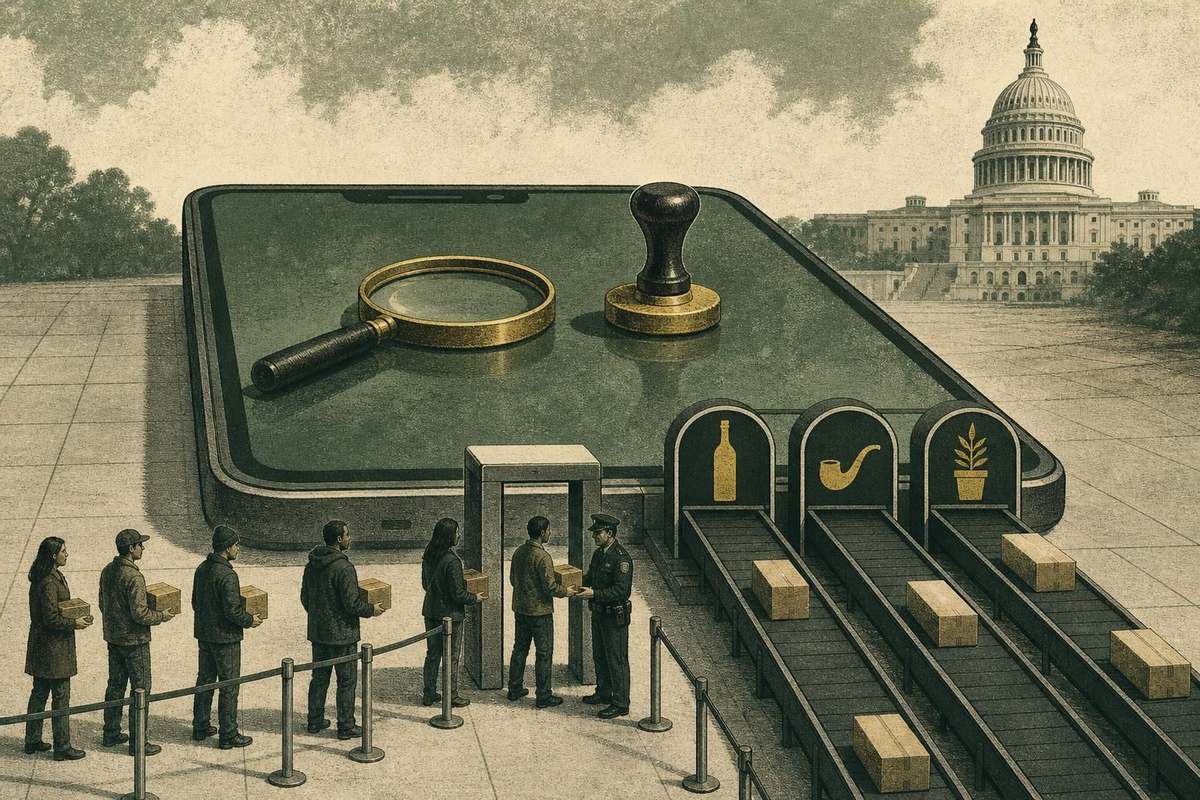
That description is accurate, and it is also incomplete in a way that matters for anyone who buys digital ads. Rep. Valerie Foushee, a North Carolina Democrat, introduced the SAFE Platforms Act on Sept. 16 with Rep. James Moylan, Guam's Republican delegate, and it was referred the same day to the House Energy and Commerce Committee. Its high-risk list does include gambling and unregulated financial products such as cryptocurrency. It also includes financial services, health products, educational credentials and housing. And it places cannabis in a single clause: "Tobacco, alcohol, cannabis, and other consumables restricted by age." The bill treats a dispensary the way it treats a brewery. The question for cannabis companies is whether platforms will. (S3, S4)
The bill's core is not about cannabis at all. It would bar large platforms from materially contributing to fraudulent content aimed at consumers and order them to build defenses: a visible "Report Scam" button on any content that could carry advertising, privacy-protective default settings, systems to stop banned scammers from opening new accounts, and identity checks on every advertiser. Foushee's office cited Federal Bureau of Investigation figures showing older Americans lost $4.8 billion to internet scams in 2024, and said online and AI-enabled scams cost North Carolina families $3 billion last year. (S3, S4)
The cannabis provision sits in Section 2(e). Every advertiser on a covered platform, a service with at least 100,000 monthly active users or more than $25 million in annual revenue, would have to supply a legal name, a physical address, contact details, a tax identification number, proof of business registration and a declaration of whether it sells or promotes anything in a high-risk category. Advertisers that do would face enhanced verification: additional documentation to validate identity and business operations, a review of their online presence and business history, and periodic re-verification. Platforms would keep the records for at least three years and show users each advertiser's legal name, home jurisdiction and how long it has held an account. (S3)
Read narrowly, that is paperwork a licensed operator already has. A dispensary has a state license number, a street address, inspection records and a tax ID. Deneson made the point herself: a dispensary, she wrote, is not an anonymous offshore account. The council's own guidelines already ask advertisers to verify their licenses. If enhanced verification meant only producing a license, most of her members would clear it in an afternoon. (S2, S1)
The harder question is what the bill does to the platforms' incentives. Section 3 makes a violation an unfair or deceptive practice enforceable by the Federal Trade Commission, lets state attorneys general sue on behalf of residents, and gives injured individuals a private right of action, with damages up to three times the base amount for willful violations and mandatory attorney's fees for winning plaintiffs. Section 4 says nothing in Section 230 of the Communications Act, the law that usually shields platforms from liability for user content, may be construed to impair enforcement. A safe harbor protects platforms that review reported content within 48 hours and act within seven days. (S3)
For a platform weighing that exposure, the cheapest compliance strategy for a small, legally complicated ad category is to decline it. That is the outcome Deneson fears, and her industry has data on how often it already happens. In the council's 2026 Cannabis Advertising Investments and Sentiments Survey, she wrote, 56 percent of marketers said a platform had shut down their account or canceled their ads, and 69 percent named restrictions as their top frustration. Allison Disney, a founding board member who reported the survey in Edition IV, found that 77 percent of cannabis marketers say they need to advertise, yet 57 percent put less than 2 percent of their annual budgets into paid media, or nothing. (S1, S2)
“Licensed cannabis operators aren't the scam. They're the safe, tested alternative.”
— Amy Deneson, Executive Director and Co-Founder, Cannabis Media Council
Cannabis companies have watched private platforms move before federal law does. This month Square stopped allowing sellers to process CBD and hemp-derived products, telling them to clear those items from their catalogs by Oct. 15, nearly two months before the federal hemp redefinition takes effect. Vendors, as one hemp executive told cannabis.inc's readers at the time, manage risk against a date; they do not wait for it. (S5)
The bill's supporters see the liability as the point. Emily Peterson-Cassin, director of competition and market fairness at the Consumer Federation of America, said in Foushee's announcement that fraudulent content and scams, supercharged by AI, are taking over social media platforms and costing billions. J.B. Branch, director of federal AI governance and technology policy at Public Citizen, said the bill recognizes that platforms have a role in preventing fraud, especially when their advertising systems, recommendation tools and other design features help facilitate it. Public Citizen, the Consumer Federation, the Hispanic Federation and Oregon Consumer Justice endorsed it. (S4)
From their side, a category list is a blunt but even-handed tool: the bill applies the same extra checks to investment offers, health products, housing listings and age-restricted goods rather than singling out any one industry, and it leaves the Federal Trade Commission room to add categories by regulation. Moylan framed the bill around accountability. "Online scams are becoming more sophisticated, and families should not be left to bear the consequences while the platforms being used to facilitate these schemes face little accountability," he said. (S4)
Deneson's answer is that the category is the wrong unit. Bad actors, she wrote, do not hold licenses to begin with, and added friction will mainly burden the businesses playing by the rules while pushing consumers toward unregulated sellers who do not check IDs or share third-party test results. She proposes an industry code instead, modeled on the voluntary advertising standards alcohol has used for decades, and has invited regulators and publishers to comment on it. The council also announced a Publisher Circle of outlets that commit to accepting responsible cannabis advertising, with LEAF, Hiii and Fat Nugs as founding partners. (S1, S2)
There is a wrinkle that neither the sponsors' announcement nor the council's op-ed addresses. The bill defines an advertiser as anyone who pays a platform to promote a product or service "in interstate commerce." State-licensed cannabis cannot legally cross state lines, even after April's partial move of state-licensed medical marijuana to Schedule III. The bill does not say how that definition applies to an intrastate product promoted on a national platform. The bill gives the FTC authority to write rules implementing and interpreting the act, which is where that question would most likely be settled. Platforms would also have to show users each advertiser's legal name, so a dispensary brand would appear under the licensed entity that pays for its ads. (S3, S2)
Cannabis ads face other federal pressure. In July, Marijuana Moment reported, the House passed the Kids Internet and Digital Safety Act, which would bar platforms from facilitating cannabis advertising to users they know are minors, and in August a Senate committee advanced the Kids Online Safety Act with a similar provision for video streaming. Those bills target ads to minors. H.R. 10433 reaches further, into ads aimed at adults, by putting cannabis advertisers on a separate verification track. (S6)
The calendar may decide more than the arguments. The introduced text lists Moylan as Foushee's only partner, and Congress.gov shows no action since the Sept. 16 referral. The 119th Congress ends in January, and a bill that has not moved by then must be reintroduced. Foushee's office has called it groundbreaking; it has not yet had a hearing. (S3, S4)
Deneson is not waiting to find out. Her council's 2026 Buy Legal campaign is scheduled to run on Meta, Surfside and Leafly in support of cannabis retailers, the same kind of paid placement the bill would route through enhanced verification. The council has asked policymakers to review the code and, before H.R. 10433 moves, to recognize licensed operators who meet it. Whether anyone in the Energy and Commerce Committee reads it before the platforms decide for themselves is the open question she has put on the record. (S1, S2)
- [1]Cannabis Media Council: Full Spectrum Edition IV press release (Oct. 13, 2026)
- [2]Marijuana Moment op-ed by Amy Deneson: New congressional bill wrongly targets cannabis as 'high-risk'
- [3]Congress.gov: H.R.10433, SAFE Platforms Act, text as introduced Sept. 16, 2026
- [4]Rep. Valerie Foushee: Foushee, Moylan introduce bipartisan SAFE Platforms Act (Sept. 21, 2026)
- [5]cannabis.inc: UPS rewrote its hemp rules; Square left Oct. 15
- [6]Marijuana Moment: Cannabis would be considered a 'high-risk' product under new congressional bill
- [7]Congress.gov: H.R.10433 overview and actions
Comments are open to verified operators. Sign in or create a free account to weigh in.
Georgia Wrote the Mail Carrier Into Its Cannabis Rules. Two Senators Want the Carrier Out
Rule 351-6-.11, in force since Oct. 26, lets Georgia dispensaries ship to patients by certified mail. Postal rules tie controlled-substance mail to DEA registration, and Georgia's 60 timely dispensary applicants were not among the 900-plus the agency registered Oct. 30.

Rhode Island Said No to 11 p.m. Cannabis Delivery in September. Five Weeks Later, It Voted Yes
A Pawtucket compassion center's petition lost 3-0, then won 2-1 on Oct. 23. The rule book still says deliveries stop at 8 p.m., the commission has not named a start date, and its next meeting is Dec. 4.