Texas Hemp Sellers Get Their Day in Court Dec. 8. Federal Law Changes the Rules Three Days Later
A Houston lawyer says state health officials rewrote the THCA math without lawmakers, and his clients filed again Oct. 19. DSHS says it followed the agriculture code. Its fees rose to $10,000 a facility, while the plaintiffs say the old program already ran a surplus.

At 1:53 a.m. on Oct. 1, the electronic filing system of Texas's Fifteenth Court of Appeals in Austin stamped a brief from Jerad Najvar as accepted. The Houston lawyer was not a party to the case, Texas Department of State Health Services v. Texas Hemp Business Council. He was writing as a friend of the court for two clients who had been fighting the same agency since spring: TSVL LLC, which does business as Green Nation and runs three hemp stores in Tyler and Lindale, and a trade group formed days before the fight began, the Texas Hemp Constitutional Alliance. (S1, S2)
The brief's argument fits in a sentence of its opening summary: "This case is not about hemp." It is about whether a state health agency can change how Texas measures THC in finished hemp products, a change lawmakers declined to make in 2025 and one that has kept smokable hemp flower off Texas shelves for most of the time since March 31. Najvar put it more bluntly in a statement on Green Nation's site: "DSHS's new rules take a sledgehammer to a problem that requires a scalpel." (S1, S3)
Eighteen days after the brief, on Monday, Oct. 19, Green Nation and the alliance filed again in Travis County, this time naming two officials: Stephanie Muth, who heads the Texas Health and Human Services Commission, and Imelda Garcia, interim commissioner of DSHS. The Health and Human Services Commission told KXAN it does not comment on pending litigation. (S4, S5, S6)
Texas's hemp retailers now face two dates three days apart. At 9:30 a.m. on Dec. 8, the Fifteenth Court will hear oral argument in the state's appeal of the industry's original challenge, WFAA reported, citing the Texas Hemp Business Council. On Dec. 11, a federal change written into the 2026 agriculture appropriations law takes effect, redefining hemp by total THC and capping finished consumer products at 0.4 milligrams per container. If the Texas court rules for the industry, the federal rule could still leave much of the same product unsellable a few days later. If it rules for the state, Texas will simply have gotten there first. Either way, the case will decide how far a Texas agency can go in rewriting a product standard the Legislature declined to change. (S7, S8)
The rule at the center of all of it is a definition. THCA, the acid form of THC in raw cannabis, does not intoxicate on its own but converts to delta-9 THC when heated. Texas law, like the 2018 federal farm bill, defines hemp as cannabis with no more than 0.3 percent delta-9 THC by dry weight. The rules DSHS adopted for March 31 fold THCA into "total delta-9 THC" for consumable hemp products, which means flower that tests low in delta-9 but high in THCA now fails. (S9, S10)
The rules trace to Gov. Greg Abbott. On Sept. 10, 2025, his Executive Order GA-56 directed DSHS to bar sales to minors, add age verification and update testing and record-keeping. That came after Abbott vetoed Senate Bill 3, which would have banned most THC hemp products, on June 22, 2025. In his veto proclamation, quoted in the plaintiffs' March petition, he called the bill "well-intentioned" but said it "would never go into effect because of valid constitutional challenges." (S2, S9)
DSHS published its proposal on Dec. 26, 2025, and closed comments on Jan. 26, 2026. It heard from 1,421 commenters, 1,280 of them individuals, according to the adoption notice in the Texas Register, signed by agency general counsel Cynthia Hernandez and filed March 2 for a March 31 effective date. Most commenters opposed the THCA change as beyond the agency's authority. Most also opposed the new fees. (S9)
The fees are the second front. The rules set manufacturer licenses at $10,000 per facility per year and retail registrations at $5,000 per location; with the state's online processing fee, DSHS's site lists $10,300 and $5,150. Several news accounts of the Oct. 19 suit said the fees rose "by" 4,000 percent and 3,333 percent. The March petition, from which the new filing borrows its language, says something narrower: that the new manufacturer fee "is 4,000% of the preexisting fee" and the retail fee "is 3,333%" of the old one, or 40 times and 33 times the earlier charges. (S2, S4, S11)
The petition's more pointed fee claim is buried a few lines lower. Citing DSHS's 2025 fee manual, it says that in the fiscal year ending Aug. 31, 2025, the consumable hemp program collected more than $1.6 million in fees while spending less than $800,000 to run, more than twice its costs before any increase. On that basis, the plaintiffs argue, the new fees are an occupation tax that only the Legislature could impose. (S2)
DSHS has answered both complaints on the record. On THCA, its adoption notice says the agency "does not agree" that the change exceeds its authority. It points to the agriculture code's definition of hemp, which covers "all derivatives, extracts, cannabinoids, isomers, acids," to a Texas Department of Agriculture rule requiring testing to account for THCA conversion, and to a statute requiring hemp rules to be consistent with federal law, which it says accounts for THCA. On fees, DSHS said state law lets it recover the direct and indirect costs of the program and that it priced in inspector salaries and travel, laboratory testing, legal and hearing costs for enforcement cases, and help from the Texas Alcoholic Beverage Commission and Department of Public Safety under GA-56. (S9)
Najvar's brief attacks the first answer through the second half of the same 2019 law, House Bill 1325. That law did require testing that accounts for THCA, but only before harvest: a licensed grower must test a field sample "using post-decarboxylation" or a similar method. The separate chapter governing consumable products refers only to a product's "delta-9 tetrahydrocannabinol concentration," and gives manufacturers two ways to show compliance. Under one, a finished product is never tested at all if each hemp ingredient passed earlier tests. The new rules, the brief says, require total-THC testing at three stages, before processing, of ingredients and of every finished product, closing pathways the statute left open. (S1)
The State's reply brief, as the amici describe it, treats the switch to total THC as a scientific judgment within the commissioner's discretion. "There is no gap or loophole for DSHS to fix," Najvar wrote in answer. He also argued that changes to the federal hemp definition do not let DSHS "nullify Texas statutes." (S1)
“DSHS's new rules take a sledgehammer to a problem that requires a scalpel.”
— Jerad Najvar, attorney for Green Nation and the Texas Hemp Constitutional Alliance
The industry's original case shows how unsettled the ground has been. The Texas Hemp Business Council, the Hemp Industry and Farmers of America and several hemp companies won relief from a Travis County court in the spring, and the state appealed from the 455th District Court, where Judge Daniella DeSeta Lyttle presides over the case. On June 5, the Fifteenth Court denied the industry's emergency motion to keep the injunction in force and lifted its administrative stay, which put the rules back into effect while the appeal proceeds. (S1, S3, S12)
For the plaintiffs, the stakes are not abstract. Green Nation estimated in its March petition that 85 to 90 percent of the products contributing to its revenue would be prohibited under the rules, and the alliance said the same share of the products its members handle would be. The alliance's membership is limited to hemp businesses, with convenience stores excluded, according to the filings. (S2, S1)
The federal clock complicates the plaintiffs' argument and the state's. The Dec. 11 change moves federal law toward the total-THC standard DSHS adopted, which supports the agency's claim that it is following the national direction. It also lowers the stakes of a Texas win: a ruling that restores the old Texas testing pathways would not shield products that fail the new federal definition. Congress could still change that date; Rep. Morgan Griffith has proposed folding hemp rules into a post-election reconciliation bill. (S7, S8)
Texas has been here before. In July, cannabis.inc reported on the collision between tightening hemp limits and the state's expanding medical program, which handed conditional licenses to large multistate operators. Hemp shippers are already rewriting their terms for Dec. 11. (S13)
- Dec. 8, 2026, 9:30 a.m., Oral argument in the Fifteenth Court of Appeals, No. 15-26-00099-CV, per the Texas Hemp Business Council.
- Dec. 11, 2026, Federal total-THC hemp definition and 0.4-milligram cap take effect unless Congress acts.
- 2027 legislative session, Lawmakers who declined to pass a ban in 2025 get another chance to settle the THCA question in statute.
Najvar has framed the fight from the beginning as a question about who writes the law. "After the Legislature failed to reach consensus, bureaucrats in the Executive branch anointed themselves to cherry-pick pieces of rejected bills to enforce unilaterally and practically overnight," he said in the Green Nation statement. The agency, in its own words, says it is doing what the statutes and federal rules require. (S3, S9)
Green Nation lists three storefronts, two in Tyler and one on Lindale's Main Street, and its website asks for donations to a legal fund whose goal is still marked to be determined. The brief Najvar filed in the small hours of Oct. 1 asks the appeals court to decide that the Legislature meant what it wrote in 2019. The appeals court hears argument on Dec. 8, three days before the federal rule takes effect. (S3, S12)
- [1]Brief of Amici Texas Hemp Constitutional Alliance and TSVL LLC, No. 15-26-00099-CV, Fifteenth Court of Appeals (filed Oct. 1, 2026)
- [2]TSVL LLC d/b/a Green Nation and Texas Hemp Constitutional Alliance v. DSHS - Original Petition, D-1-GN-26-002415 (Mar. 31, 2026)
- [3]Green Nation - Lawsuit page and press kit with statements from counsel Jerad Najvar
- [4]KXAN - THC Alliance, hemp manufacturer sue over DSHS 'redefining' delta-9 to count THCA (Oct. 21, 2026)
- [5]WFAA - Newly filed lawsuit seeks to overturn Texas smokable THC ban
- [6]MMJ Daily - Texas Hemp Alliance and Green Nation sue DSHS over THCA reclassification
- [7]WFAA - Texas smokable THC hearing set for December
- [8]Nevada Subcommittee on Taxation of Cannabis report (summarizes Section 781 of the 2026 agriculture appropriations act and the Dec. 11 date)
- [9]Texas Register - DSHS adopted rules, 25 TAC Chapter 300, consumable hemp products (March 20, 2026 issue)
- [10]MJBizDaily - Texas hemp groups sue over rule counting THCA as delta-9 THC (Oct. 23, 2026)
- [11]Texas DSHS - Consumable Hemp Program licensing and registration fees
- [12]Texas DSHS v. Texas Hemp Business Council, No. 15-26-00099-CV, order of June 5, 2026 (Leagle)
- [13]cannabis.inc - UPS rewrote its hemp rules for Dec. 11
Comments are open to verified operators. Sign in or create a free account to weigh in.
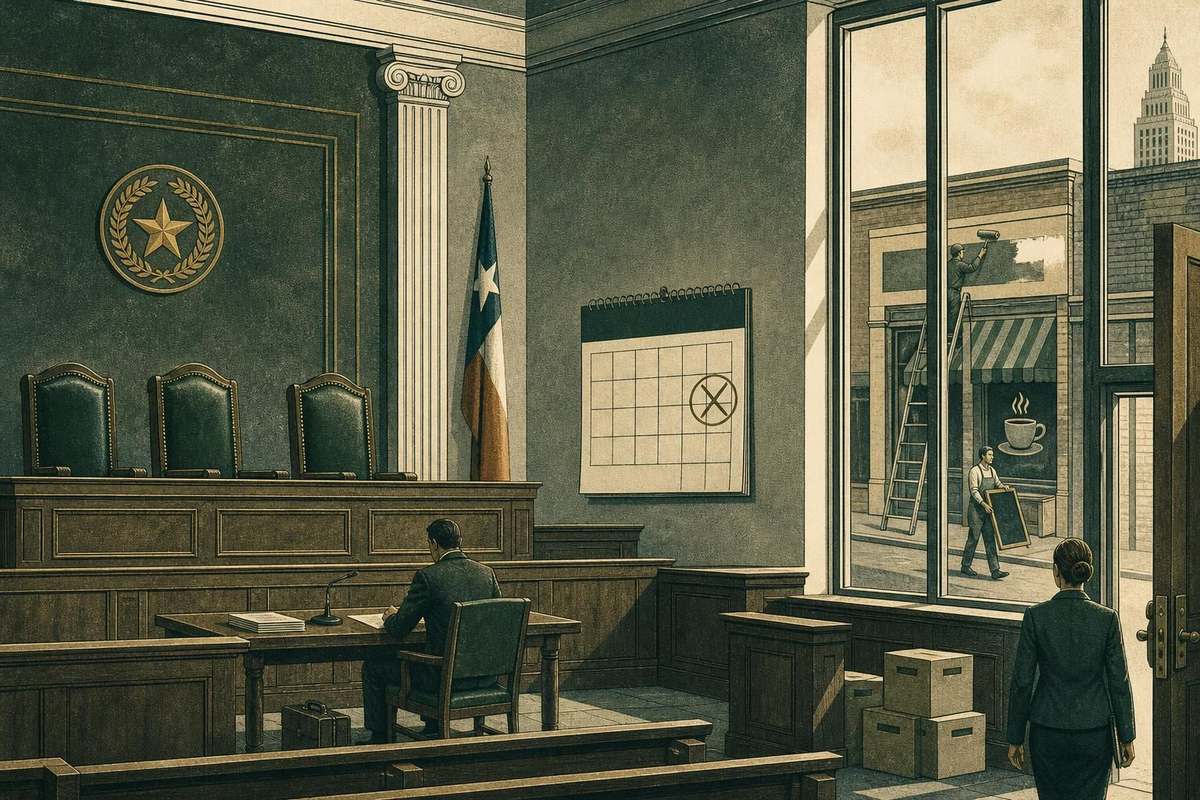
Voters Fired the Judges in Texas's Hemp Case. The Dec. 8 Hearing Went With Them
Two days after Democrats swept the 15th Court of Appeals, its clerk cancelled the THCA argument and handed the case to three justices who take office in January. Lt. Gov.-elect Vikki Goodwin says DSHS lacked the authority to write the rules at all.
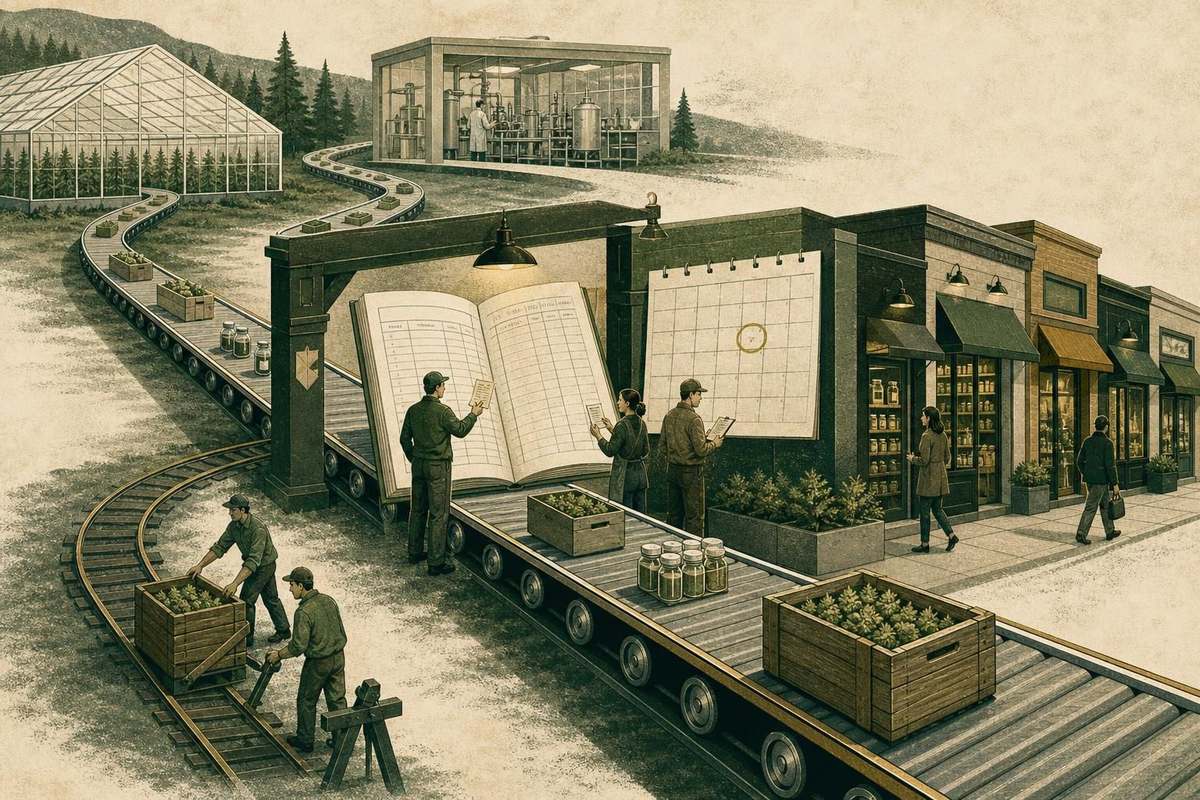
After 900 DEA Registrations, a Nov. 29 Deadline to Cut Off Unregistered Cannabis Suppliers
A four-page DEA notice says registrants and timely applicants who keep buying from businesses that missed the June 26 window risk denial or revocation. The agency's own list counts 6,983 timely entries, 2,442 of them in Oklahoma.