Alabama's Law Allows 37 Cannabis Storefronts. Five Years On, Litigation Has Most of Them Stuck
Callie's Apothecary and Bama Bloom are adding stores in Bessemer and Birmingham, but every integrated license remains tied up in court. Washington has now named Alabama among seven states with DEA-registered dispensaries, putting a Nov. 29 federal supply-chain test on a market still learning to stock its shelves.
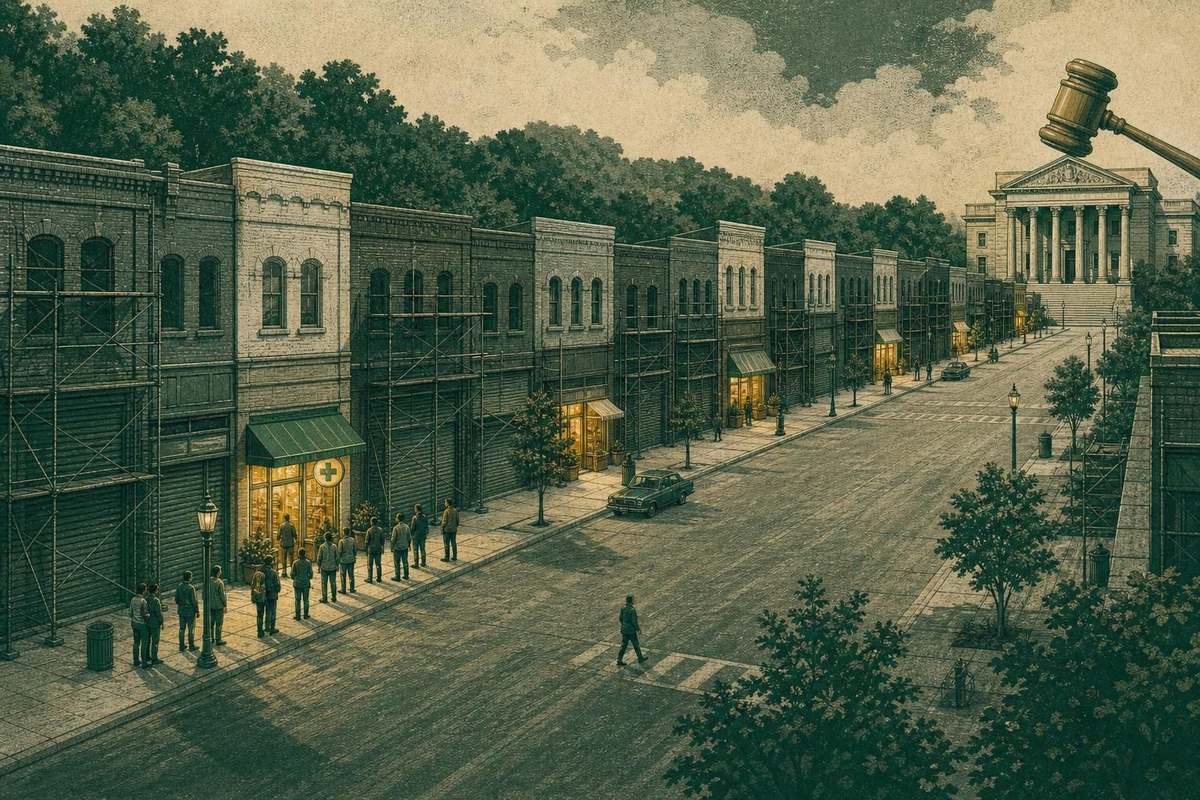
Vince Schilleci spent his first week as Alabama's only legal cannabis retailer deciding how much each patient could take home. Callie's Apothecary, the dispensary he owns in Montgomery, opened on June 4 after a soft opening the day before, and by the following Thursday 102 patients had bought products in 111 transactions. Schilleci had only so much inventory, and he did not know when the next delivery would land. (S2)
"We've had to, I hate to use this term ration, but we've limited how much patients could purchase, just because we knew how many patients were coming on board, and we at least wanted people to have a chance to have something," he told the Alabama Reflector on June 11. A second shipment had arrived that day and a third was due the next, so he lifted the limit: patients could now buy their full 60-day allotment. His store manager, he said, had watched one patient walk out, jump and click their heels. (S2)
Nearly five months later, on Thursday, October 29, the Alabama Medical Cannabis Commission held its public meeting in Montgomery. Justin Aday, the commission's general counsel, said two more dispensaries would open the following week: a third Callie's location in Bessemer and a second Bama Bloom store in Birmingham, joining Callie's sites in Montgomery and Talladega and Bama Bloom's in Athens. That makes five dispensaries for a state of roughly 5.2 million people. (S1, S9)
Alabama legalized medical cannabis in 2021, in a law that caps the market tightly. It allows four dispensary licenses with up to three sites each and five integrated facility licenses, companies that grow, process and sell, with up to five sites each. That is 37 possible storefronts. Today, three dispensary licensees hold permits, the fourth license is tied up in litigation, and the integrated licenses are still in court; Mark Wilkerson, an attorney for the commission, said the agency is far from awarding them. (S10, S1)
The numbers officials gave on October 29 show a program that is growing from a very small base. Aday said more than 2,300 medical cannabis cards have been issued and projected the three open stores would bring in $130,000 to $140,000 in October. "The past two months, we've had a little over $120,000 monthly revenue, which is pretty good for a new market," said Sam Blakemore, the commission's chair. (S1)
Getting here took longer than anyone promised. Gov. Kay Ivey signed the law in 2021, and regulators had said sales would start in 2024. Instead, multiple licensing rounds were revoked or canceled after losing applicants alleged bias and impropriety, and the resulting lawsuits pushed the launch past that target. Five parents sued the commission over the delays; a Montgomery judge dismissed that case in August 2025. The commission did not approve three of the four dispensary licenses until December 2025, and the first sale came in June. (S9, S2)
A day later, the federal government added a complication. On October 30, the Justice Department said the Drug Enforcement Administration had issued its first registrations to more than 900 medical dispensaries in seven states, Alabama among them, under the April order that moved state-licensed medical marijuana into Schedule III. The department named no businesses. The DEA's accompanying notice gave registrants and pending applicants until November 29 to make sure every supplier they buy from is itself a DEA registrant or a timely applicant. (S7, S11)
Alabama's supply chain is short enough to count on two hands. "Altogether we have those two dispensary licensees that are operating. We have five cultivators who are operating, two processors are operating, two secure transporters, and then of course the one state testing lab that we have," Aday said at the meeting. The DEA's timely-applicant list, dated October 30, shows three Alabama entries: one dispensary and two manufacturers. The list does not name companies, and the DEA removes entries once registrations are granted, so it cannot show which Alabama businesses hold federal status today. (S1, S8)
The state's own health officials took months to reconcile the federal change with Alabama law. On May 21, the State Committee of Public Health voted unanimously to object to the federal rescheduling so the Alabama Department of Public Health could study it. "We're not saying Alabama's not going to do this," State Health Officer Dr. Scott Harris told the committee. After a July public hearing, the committee withdrew the objection on September 17. "The program's already live, even though it's still Schedule I in Alabama," Harris said then, explaining that the state law was written to decriminalize cannabis for authorized patients. (S5, S6)
The commission's own reading in May was that the federal move would have no immediate effect on the state program. The November 29 deadline tests that assumption. According to the DEA's notice, a registered or timely-applicant Alabama dispensary that keeps buying from a cultivator or processor without federal status after that date puts its application or certificate at risk. The notice says it describes how the DEA reads its own rule and does not itself carry the force of law. (S5, S11)
The growth since June has come mostly from paperwork. On June 11 the commission counted 446 issued cards and 52 physicians certified by the Alabama Board of Medical Examiners to recommend cannabis. By late August, when Callie's opened its Talladega County store, WVTM 13 reported 76 certified physicians and an estimated 800 cards. On October 29, the board's roster showed 83 physicians, 62 of them registered with the commission, and Aday said staff were contacting the rest and running webinars on the patient registry. (S2, S4, S1)
The products have moved more slowly. Alabama's statute allows tablets, capsules, tinctures, gelatin cubes, topicals, suppositories, transdermal patches, nebulizers and inhaler liquids, and it requires one universal flavor for every cube. Raw plant material, anything smoked or vaped, and infused foods are excluded. In August, Schilleci said inhalers, nebulizers and tablets had not yet reached dispensary shelves because processors were still bringing them to market. In June, his menu priced products at $42 to $52 each. (S10, S4, S2)
Schilleci has never pretended it was easy. Before opening, he described what stands between a processor and his shelf: lab testing and entry into the state's seed-to-sale tracking system. "We have to remember this product is not like potato chips or something that's easy to ship," he said in May. In Talladega in August he put it another way: "Being a highly regulated industry, it does take time. It's not like opening up a convenience store." (S3, S4)
“I would do it again just to see the smile on these patients' faces. Now, I would hope a little bit easier, but it's been worth it.”
— Vince Schilleci, owner, Callie's Apothecary
Patient advocates are less patient. H. Marty Schelper of the Alabama Cannabis Coalition told WVTM 13 that many residents still do not know how to apply for a card or find a qualifying doctor. "Citizens did not know how to sign up for the program, how to get their medical cannabis card," she said. The coalition also points to the costs of staying in the program: repeated doctor visits, pregnancy testing for some female patients, and prices it says run higher than in neighboring states. It wants more product types allowed. (S4)
Schilleci's answer is scale. "It's not as low as Mississippi or Florida, but you also have many more cultivators, processors," he said. "It's a more mature market and we just need time." Alora Frank, an area manager at Callie's who worked in Florida's medical market before coming home to Alabama, described how patients change after a nervous first visit, when stigma still hangs over the purchase. "We are dosing cannabis, but we get doses of humanity back," she said in May. (S4, S3)
The regulator is changing hands too. John McMillan, the commission's director, announced his intent to retire at the October 29 meeting, and Blakemore named a transition committee that includes himself. "I think we're going to open it up to all resumes from wherever we can find them," Blakemore said; the committee reports back in December. McMillan had said in May that the commission was "very anxious to move forward so we can become what the Legislature envisioned." The third dispensary licensee, RJK Holdings, has locations planned in Oxford, Mobile and Daphne, and the fourth license's appeal is fully briefed. "The court could issue a ruling on merits at any time," Wilkerson said. (S1, S3)
Other late-starting states have moved faster once licenses cleared. Kentucky now has a dispensary in each of its 11 licensing regions, cannabis.inc reported this week. Alabama has five stores and a statute that allows 37.
- Week of Nov. 2, 2026: Callie's Apothecary in Bessemer and Bama Bloom in Birmingham expected to open, per the commission's general counsel.
- Nov. 29, 2026: DEA expects registered and timely-applicant businesses to trade only with other registrants and timely applicants.
- December 2026: commission meeting where the director-search committee is due to report.
- Pending: Alabama Court of Civil Appeals ruling on the fourth dispensary license; integrated facility licenses remain in litigation.
Next week Schilleci will open his third store, in Bessemer, a short drive from Birmingham, where Bama Bloom opens the same week. Five months ago he was rationing products in Montgomery and waiting on a delivery truck. Now Washington is asking every federally registered dispensary in his state to account for its suppliers by the end of November, while most of the 37 storefronts the Legislature allowed are still waiting on a court. "We just need time to get there," he said in August. (S1, S4, S11)
- [1]Alabama Reflector: Two Alabama cannabis dispensaries expected to open next week (Oct. 29, 2026)
- [2]Alabama Reflector: Alabama medical cannabis dispensary sees over 100 patients in first week (June 12, 2026)
- [3]Alabama Reflector: Montgomery medical cannabis producer says product is 'days away' (May 14, 2026)
- [4]WVTM 13: Medical cannabis dispensary opens in Talladega County (Aug. 28, 2026)
- [5]Alabama Reflector: Alabama delays rescheduling of marijuana to determine implementation (May 22, 2026)
- [6]Alabama Reflector: Alabama withdraws objections to federal marijuana rescheduling (Sept. 18, 2026)
- [7]U.S. Department of Justice: Federal registrations for medical marijuana dispensaries (Oct. 30, 2026)
- [8]DEA: Medical marijuana timely applicants list (Oct. 30, 2026)
- [9]MJBizDaily: Alabama medical cannabis market continues slow rollout with more openings
- [10]Alabama Medical Cannabis Commission: Compassion Act statute, Title 20 Chapter 2A (updated Nov. 2024)
- [11]DEA Diversion Control Division: Timely Applicant Information for Medical Marijuana Applicants (Oct. 30, 2026)
Comments are open to verified operators. Sign in or create a free account to weigh in.
Cresco Paid $46.9 Million for Nine Pennsylvania Stores. Then Pennsylvania Flipped Its Senate
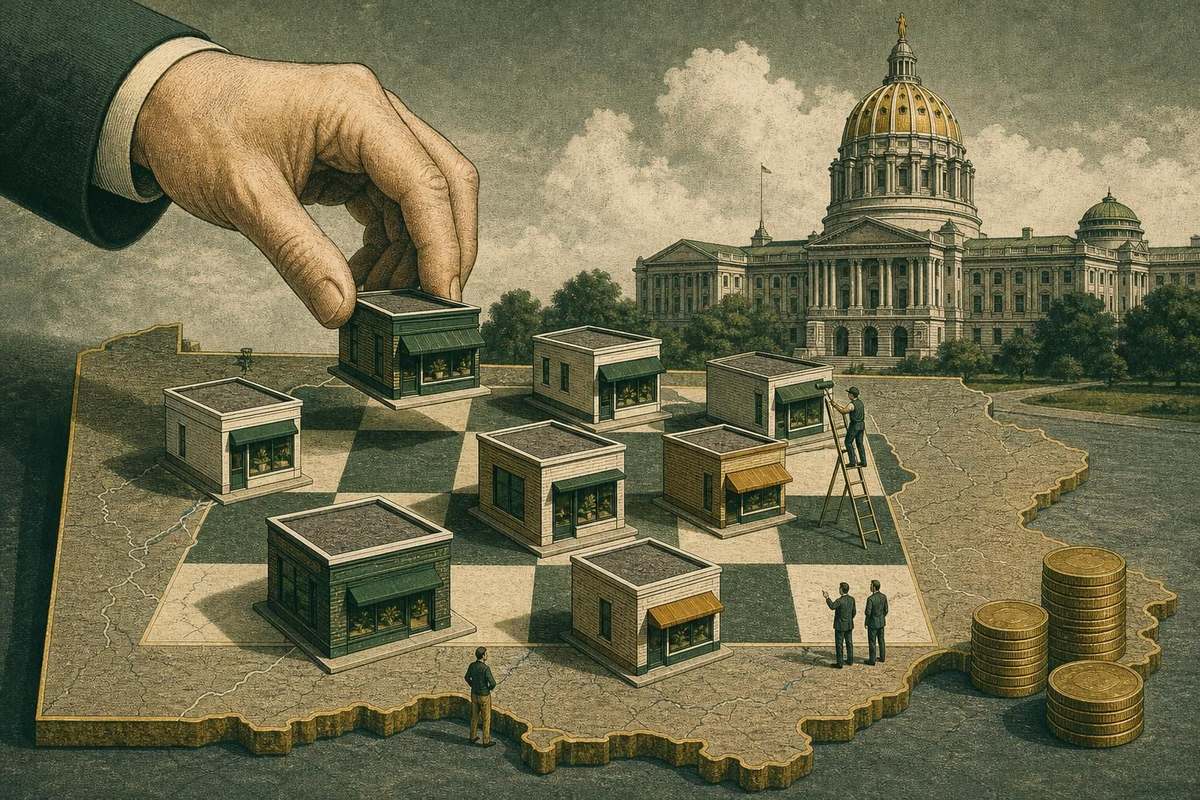
Cresco announced the PharmaCann deal as $50 million; its Nov. 6 filing books $25.3 million of the final price as permits. On the same day's call, Charlie Bachtell said adult-use odds are meaningfully better, and an analyst asked whether the real holdup was ever Republicans.
A $120 Delivery Got Her Fired. A Labor Judge Says the Union Was the Real Reason
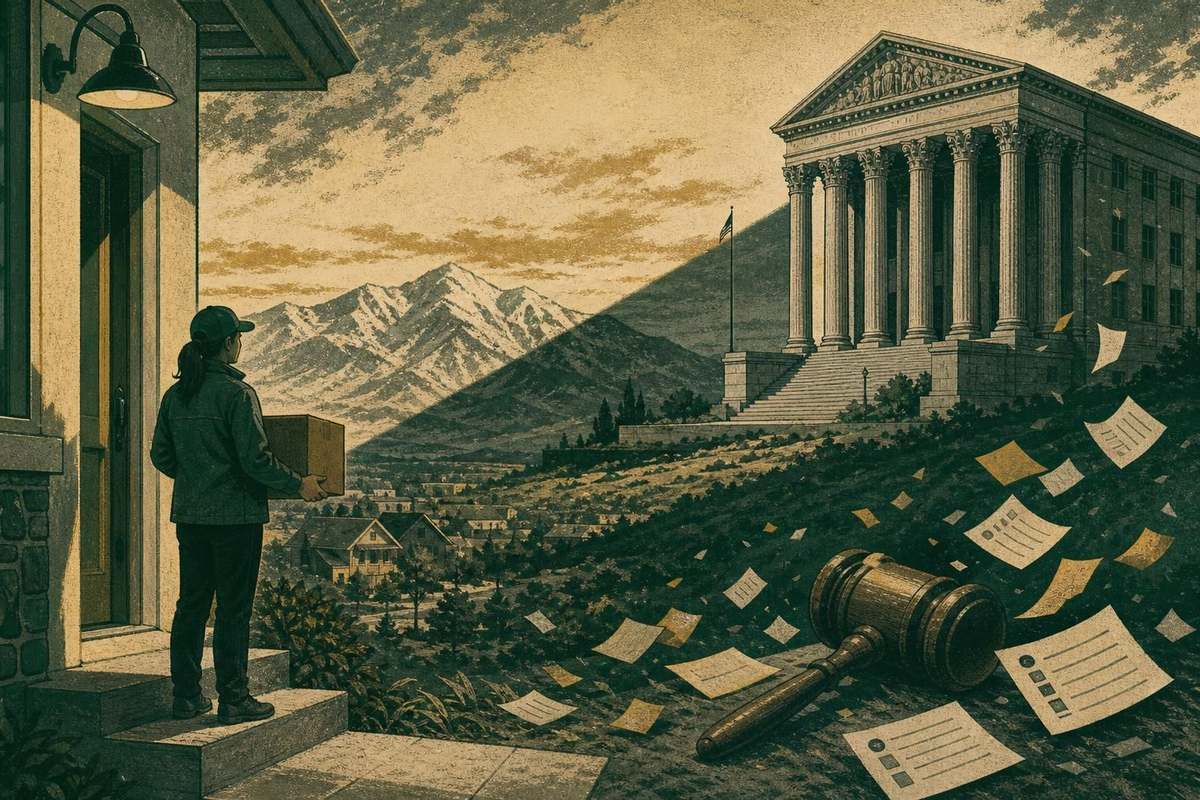
An NLRB judge ruled Nov. 2 that Utah's The Flower Shop illegally fired three pharmacy workers after a 2024 organizing drive and ordered them reinstated. The company is still arguing in federal court that labor law does not reach an intrastate cannabis business.