Cresco Paid $46.9 Million for Nine Pennsylvania Stores. Then Pennsylvania Flipped Its Senate
Cresco announced the PharmaCann deal as $50 million; its Nov. 6 filing books $25.3 million of the final price as permits. On the same day's call, Charlie Bachtell said adult-use odds are meaningfully better, and an analyst asked whether the real holdup was ever Republicans.
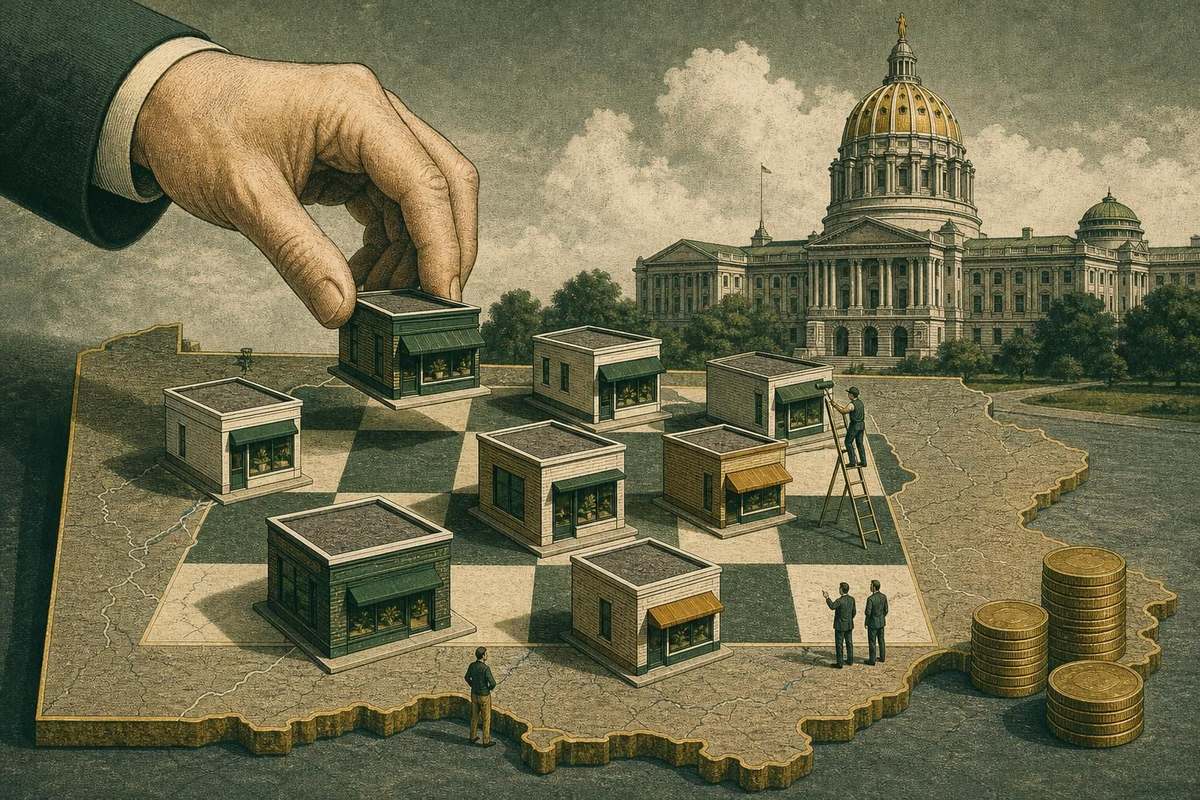
At 8:30 a.m. Eastern on Friday, Nov. 6, Charlie Bachtell opened Cresco Labs' third-quarter call the way chief executives usually do, with revenue. Then, a few minutes in, he got to the stores. "On September 2nd, we closed the acquisition of the nine Pennsylvania dispensaries," said Bachtell, Cresco's co-founder and CEO. The state approval process had taken longer than expected, he said, and in the fourth quarter Cresco would start moving the shops, which still carry PharmaCann's Verilife name, under its own Sunnyside banner. (S1)
He had a better line ready for later. Three days earlier, Pennsylvania voters had handed Democrats control of the state Senate. When an analyst asked about it, Bachtell did not hedge. "We are incredibly excited about the results in Pennsylvania and what that can mean for adult use in one of our most meaningful markets in the near term," he said. With the nine new stores, he added, Cresco runs 27 locations in the state, the largest retail network in the second-largest medical market in the country. (S1)
The timing looks like foresight. The price looks like something else. On the same morning, Cresco filed its quarterly financial statements with the Securities and Exchange Commission. They show that the deal it announced on Sept. 2 as worth $50 million closed for total consideration of $46.9 million, and that $25.3 million of that was booked as the value of the stores' licenses. (S2, S3)
That makes the PharmaCann purchase a rare public price tag on a Pennsylvania medical dispensary after a long slide, about $5.2 million a store. In 2021, Verano Holdings agreed to pay $110.3 million for The Healing Center's three dispensaries in western Pennsylvania, roughly $36.8 million each. Between those two deals, wholesale prices collapsed, six chains came to run more than half the state's stores, and the legislature failed for years to pass adult-use legalization. Cresco bought at the low end of that curve. Whether it bought at the bottom depends on what the new Senate does with the chance Bachtell described. (S2, S4, S5)
The filing fills in what the September announcement left out. Cresco said then that it had closed its acquisition of PharmaCann Penn LLC for "an aggregate consideration of US$50 million," paid in cash and a seller note on a cash-free, debt-free basis with a normalized level of working capital. The quarterly notes, filed as an exhibit to a Form 6-K signed by Bachtell, say a Cresco subsidiary signed the agreements on Jan. 30, 2026, took over operation of the stores under an April 12 agreement that let Cresco consolidate them, and completed the business combination on Sept. 1 for $46.9 million. In the September release, Bachtell described the logic plainly: "Pairing more retail doors with our scaled cultivation and leading wholesale business reinforces our position as the consolidator of choice in the markets that matter most." In a state where wholesale flower prices have collapsed, owning the shelf is how a grower keeps its margin. (S2, S3, S5)
The difference is not explained in either document, and Cresco's release had allowed for a working capital adjustment. The 6-K also records a $1.0 million reduction in goodwill during the quarter from measurement adjustments tied to deferred consideration in the PharmaCann deal. What it does show is where the money went. Of $46.9 million, the company allocated $25.3 million to licenses, $6.4 million to customer relationships, $3.8 million to inventory, $3.7 million to property and equipment, and about $12.0 million to goodwill, after assuming $9.1 million of liabilities. (S2)
The seller is helping pay for the sale. At closing, Cresco issued PharmaCann an $8.5 million unsecured promissory note that pays 6 percent interest quarterly and matures Sept. 1, 2028; the filing puts its effective interest rate at 13.2 percent. Another Pennsylvania landlord signed off along the way. NewLake Capital Partners, the cannabis real estate lender, said in its own third-quarter results that in August it consented to the change of control of PharmaCann Penn, its tenant at a dispensary property in Shamokin, and that Cresco became a guarantor of the lease. (S2, S6)
PharmaCann was a motivated seller. The Illinois company has been selling assets after closing at least three cultivation facilities, including a grow and manufacturing site in Olyphant, Pa., where 60 employees were laid off, MJBizDaily reported. It has also sold its New York medical license to Grown Rogue and 17 Colorado LivWell dispensaries to Vireo Growth. The Pennsylvania Department of Health's dispensary list, current to Sept. 16, shows nine Verilife stores, in Shamokin, Chester, Williamsport, Plymouth Meeting, Quakertown, Lancaster, Pottstown, State College and on Philadelphia's Columbus Boulevard. (S7, S8)
The election changed the math the buyer was working with. Gov. Josh Shapiro, who has put adult-use legalization in his budget proposals, declared shortly after midnight on Nov. 4 that Democrats had flipped the Senate for the first time in more than three decades, Cannabis Business Times reported. "TRIFECTA DELIVERED," he wrote on X. Three of the four seats he named had not yet been officially called that morning, and Shapiro predicted a 26-24 Democratic majority. Democrats also kept the House, whose members passed a legalization bill in May 2025 that Senate Republicans never took up, the publication noted. (S9)
Bachtell laid out the bull case when Frederico Gomes of ATB Cormark Capital Markets asked how Cresco was positioned. "We think that the opportunity for adult use there is better today, meaningfully, than it was pre-election," he said. Pennsylvania, he pointed out, is surrounded by states with adult-use sales, and bringing that business home would have a meaningful impact. Cresco has room to expand capacity at its second Pennsylvania facility, he said, but would evaluate any investment as the legislature returns. (S1)
“Keep in mind, Pennsylvania is surrounded by adult use already.”
— Charlie Bachtell, CEO and Co-Founder, Cresco Labs
The sharpest question of the call came last. Analyst Pablo Zuanic told Bachtell that everyone was assuming Democratic control of both chambers was great news for legalization. "I would argue that in the past, the holdup was not so much the Republicans in the Senate, but it was Democrats within Pennsylvania, the two chambers not being able to agree on a final program," Zuanic said, and asked whether investors should temper their excitement. (S1)
Bachtell conceded part of the point. "There is a healthy dose of caution that we always have to apply to anything that requires legislative change," he said, calling it a lesson learned by everyone who has been in cannabis long enough. Pennsylvania has been close for years, he said, and the dynamic between the House and Senate was always the crux; he believed it had improved in the previous three days. (S1)
The trade groups that lobby for the existing medical operators are pressing the same case from the outside. Meredith Buettner Schneider, executive director of the Pennsylvania Cannabis Coalition, said that with one party controlling both chambers and the governor's office, there was no reason to delay legalization, and called for a market structure that builds on Pennsylvania's existing cannabis industry while creating openings for small businesses and social equity applicants. ResponsiblePA spokesperson Monica McCafferty said voters had handed Harrisburg permission to legalize, and that 2027 is the year Pennsylvania gets it done. (S9)
Those two demands do not point the same way. A program built on the existing permits would reward companies like Cresco, which spent this year adding retail doors in a capped medical market. A program that opens new licenses for small businesses would dilute the scarcity Cresco just paid $25.3 million for. Chris Kohan, who sold The Healing Center to Verano in 2021, told NewsWorks Lab last month why he got out: "I saw where the industry was going." Six multistate retail brands, Sunnyside among them, now operate more than half of Pennsylvania's dispensaries, the newsroom found. A Cresco spokesperson told it that big operators can supply more medicine because they can more easily bear the cost of the state's production rules. The House and Senate have never agreed on which kind of market to build. (S9, S11)
Cresco's own numbers show why scale matters to it. The company reported third-quarter revenue of $172.8 million, up from $164.9 million a year earlier, and a net loss of $14.5 million. It ended September with $76 million in cash and restricted cash and $454 million of long-term notes and loans. Its interim chief financial officer, Mark Stortz, told analysts that adjusted selling, general and administrative expenses would rise modestly in the fourth quarter as the company rebrands the acquired Pennsylvania stores and opens a new dispensary in Kentucky. (S1, S2, S10)
Bachtell closed the call by noting it was Cresco's last of the year. "We'll talk to you in 2027," he said. By then, the nine Verilife stores should carry the Sunnyside name, and the Pennsylvania Senate will have new leadership and a choice about whether those signs ever face customers without a medical card. Cresco has already paid for its bet, in cash and in a two-year note. (S1, S2)
- [1]Cresco Labs Q3 2026 earnings call transcript (Nov. 6, 2026), via Yahoo Finance
- [2]Cresco Labs Form 6-K with Q3 2026 unaudited interim financial statements (filed Nov. 6, 2026), as rendered by Stock Titan
- [3]Cresco Labs: Acquires nine Pennsylvania dispensaries (Sept. 2, 2026)
- [4]Verano Holdings: agreement to acquire The Healing Center, LLC (March 31, 2021)
- [5]cannabis.inc: Six chains run over half of Pennsylvania's dispensaries (Oct. 30, 2026)
- [6]NewLake Capital Partners: Q3 2026 financial results (Nov. 4, 2026)
- [7]MJBizDaily: Cresco scoops up PharmaCann Pennsylvania assets (Sept. 3, 2026)
- [8]Pennsylvania Department of Health: Medical marijuana dispensaries with product (as of Sept. 16, 2026)
- [9]Cannabis Business Times: Pennsylvania flips Senate, secures cannabis legalization trifecta (Nov. 4, 2026)
- [10]Cresco Labs: Third quarter 2026 financial results (Nov. 6, 2026)
- [11]NewsWorks Lab: National companies dominate Pa.'s medical marijuana market (Oct. 26, 2026)
Comments are open to verified operators. Sign in or create a free account to weigh in.
A $120 Delivery Got Her Fired. A Labor Judge Says the Union Was the Real Reason
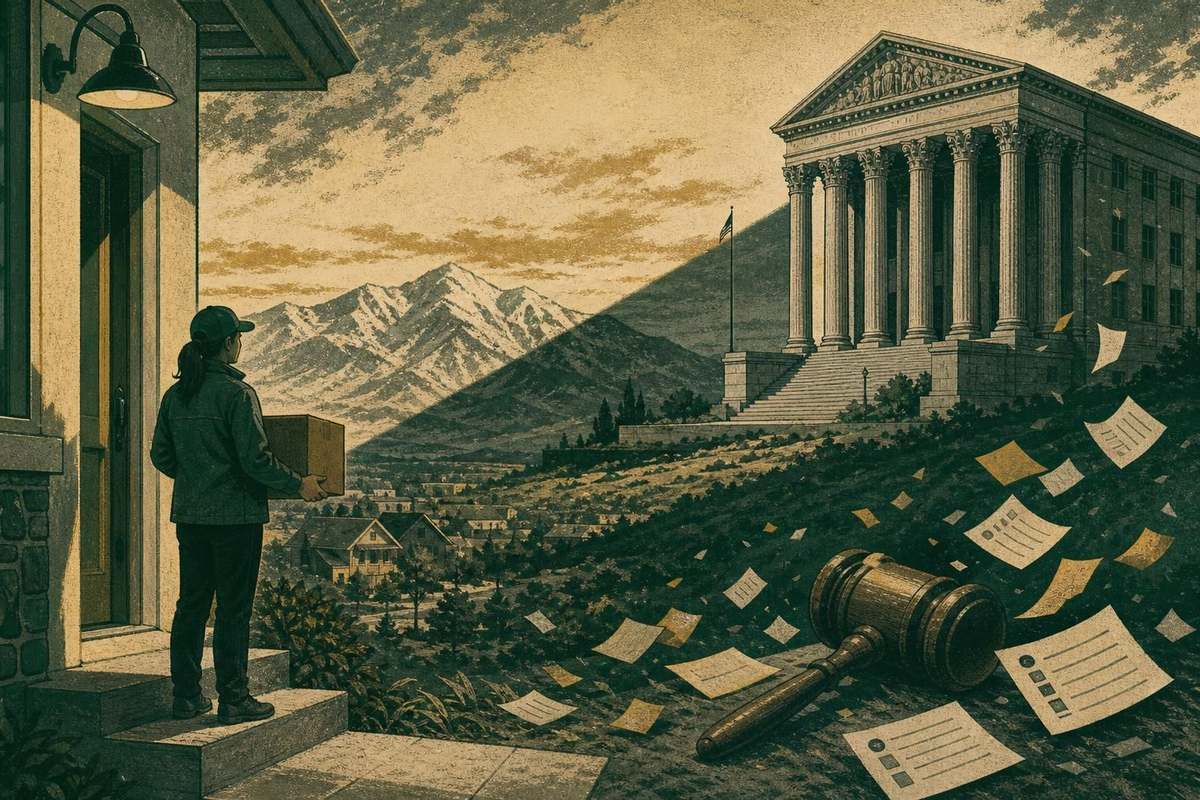
An NLRB judge ruled Nov. 2 that Utah's The Flower Shop illegally fired three pharmacy workers after a 2024 organizing drive and ordered them reinstated. The company is still arguing in federal court that labor law does not reach an intrastate cannabis business.
Alabama's Law Allows 37 Cannabis Storefronts. Five Years On, Litigation Has Most of Them Stuck
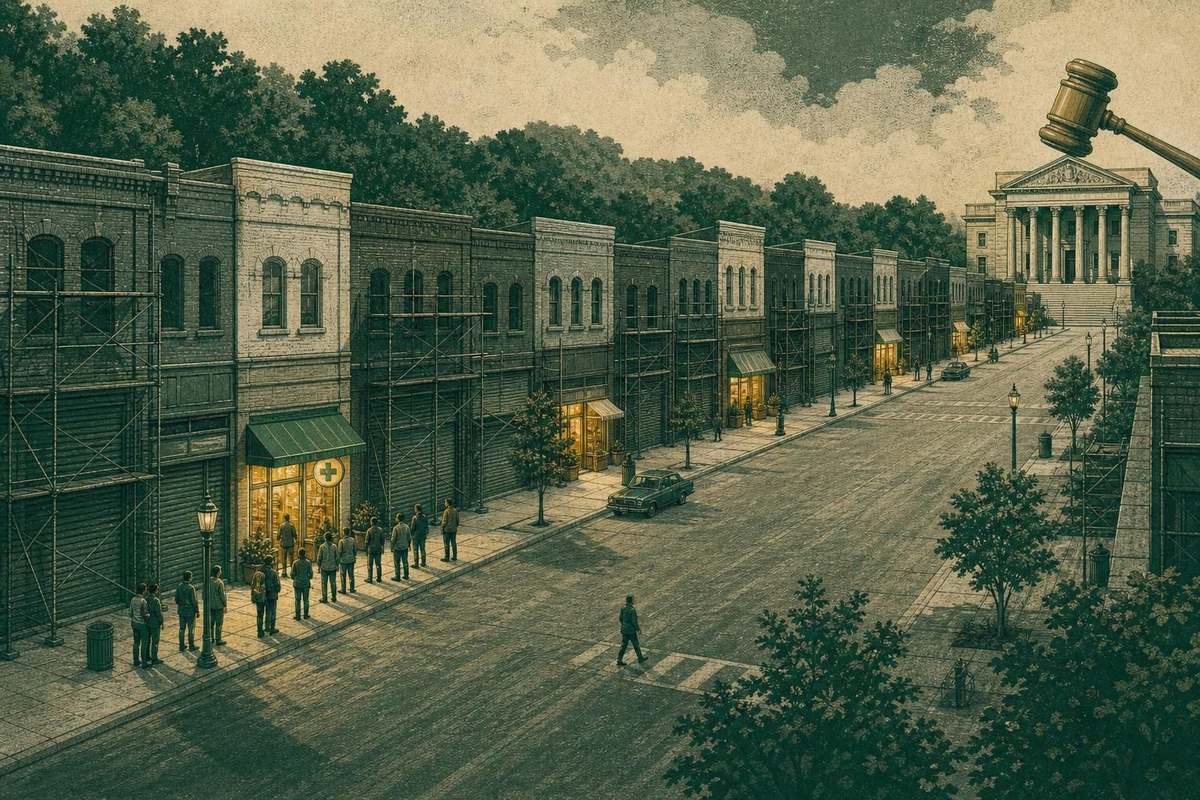
Callie's Apothecary and Bama Bloom are adding stores in Bessemer and Birmingham, but every integrated license remains tied up in court. Washington has now named Alabama among seven states with DEA-registered dispensaries, putting a Nov. 29 federal supply-chain test on a market still learning to stock its shelves.