Six Chains Run Over Half of Pennsylvania's Dispensaries, and Wholesale Cannabis Fell 74%
Chris Kohan sold The Healing Center to Verano for $110.3 million in 2021. State data show retail flower prices more than halved while wholesale fell faster, and a 2023 law meant to bring back local owners has produced about a dozen new permits.
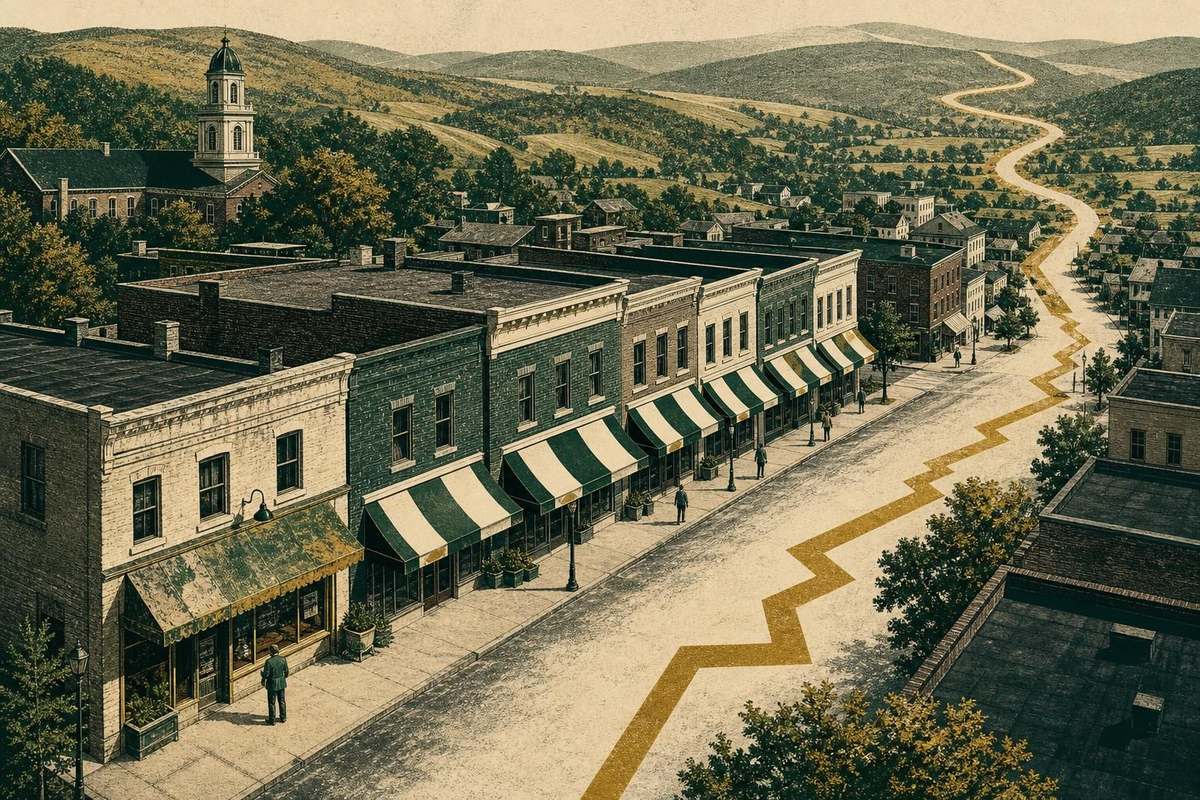
In 2018, Chris Kohan and Jay Richards stood at the entrance of a new medical marijuana dispensary on Mall Circle Drive in Monroeville, east of Pittsburgh, greeting supporters and guests at its opening. State records date the store's first sales to Sept. 28, 2018, three months after The Healing Center, the locally owned chain the two men co-founded, began selling in Washington, Pa. At the height of the business, Kohan said, he had hand-picked staff, multiple pharmacists on site, a weekly newsletter and a monthly donation drive for veterans' groups and animal shelters. (S1, S3)
Three years later he sold. On March 31, 2021, Chicago-based Verano Holdings announced a definitive agreement to buy The Healing Center, LLC and its dispensaries in Cranberry Township, Washington and Monroeville for $110.3 million, half in cash and half in Verano stock. "I saw where the industry was going," Kohan told NewsWorks Lab, a public-benefit newsroom owned by Trib Total Media, which published a review of the state's market on Oct. 26. "That got very disappointing." (S1, S2)
He stayed for several months to supervise the transition from The Healing Center's name to Verano's Zen Leaf brand. What he saw, he said, was a store that looked the same and felt different. "I didn't have any choice in that matter, really, if I wanted to be as successful as I possibly could," he said. At the time of the deal, Richards, then The Healing Center's president, struck a different note in Verano's announcement, saying Verano's focus on fiscal responsibility and culture were key factors in the decision, for the sustained viability of what the founders had built and for employees' long-term success and mobility. (S1, S2)
Kohan's sale was part of a wave of acquisitions that began in 2018, NewsWorks Lab found. A decade after Pennsylvania legalized medical marijuana, six multistate retail brands, Curaleaf, RISE, Trulieve, Zen Leaf, Sunnyside and Beyond Hello, operate more than 100 dispensaries, more than half of the state's total, according to Department of Health records cited by NewsWorks Lab. By cannabis.inc's count of the department's own dispensary list, current to Sept. 16, 2026, those six brands account for roughly 110 of about 200 listed locations. Curaleaf alone has 18. In the southwest, multistate companies now control at least 10 of the 16 permits originally issued in the region, NewsWorks Lab found. (S1, S3)
The consolidation came with a price collapse that the state's own data put in sharper terms than the coverage did. A June 25, 2025 presentation to Pennsylvania's Medical Marijuana Advisory Board, whose program update was led by Diane Brannon-Nordtomme, deputy director of the Bureau of Medical Marijuana, charted dry-leaf prices quarter by quarter. Retail fell from $15.90 a gram in January 2021 to $7.30 in April 2025, a drop of 54 percent. Wholesale, the price growers and processors receive, fell from $9.20 a gram to $2.40, a 74 percent drop. Over the same stretch, monthly patient sales rose from $95 million in January 2021 to $152 million in May 2025. (S4)
That gap matters for who survives. A grower selling to other companies' stores absorbed most of the decline; a company that grows, processes and sells in its own dispensaries keeps the retail margin on top. In Pennsylvania, that second kind of company has mostly been a multistate operator. (S4, S5)
Daylin Leach watched the change from the start. The former state senator, a Montgomery County Democrat, co-sponsored Senate Bill 3, which became the Medical Marijuana Act in 2016. He told NewsWorks Lab he once knew the name of everyone running a dispensary in Pennsylvania. Now he knows none. "There's a gravitational-like force towards consolidation in almost any industry," he said. "All I know is, I drive around Pennsylvania, I see a Curaleaf every couple blocks." (S1, S6)
The forces behind that gravity are not mysterious. Cannabis remains illegal at the federal level for most purposes, so growers and dispensaries have had little access to bank loans. Companies that could raise money from public shareholders or private lenders could buy permits, build cultivation and ride out falling prices. Trulieve entered the state in November 2020 by buying PurePenn, a Pittsburgh-area grower-processor, and Keystone Relief Centers, a dispensary operator. Cresco Labs bought Keystone Integrated Care, with stores in Pittsburgh and Greensburg, in 2024. Green Thumb Industries kept the permits it won for growing and selling. Each of the companies with the most Pennsylvania stores is publicly traded. (S1)
Some of the money arrived quietly. NewsWorks Lab traced a November 2022 federal securities filing that listed two founding partners of the private lender Chicago Atlantic, John Mazarakis and Andreas Bodmeier, among the leadership of Maitri Holdings, the parent of a dispensary brand that markets its southwestern Pennsylvania roots. That same month, according to a letter filed in an Allegheny County lawsuit, Maitri's managers wrote that the company had defaulted on debt and lease obligations to Chicago Atlantic. Representatives of Maitri and Chicago Atlantic did not respond to NewsWorks Lab's requests for comment. (S1)
Federal investigators have described the same pattern from a distance. In its August report on cannabis banking, the Government Accountability Office wrote that focus group participants said potential investors structured contracts in ways that could allow them to take control of the business. (S1, S7)
Michael Polson, director of the Cannabis Research Center at the University of California, Berkeley, said Pennsylvania followed a script he has seen in other states. After legalization, investors rush in without expecting early profits. Supply outruns demand and prices fall. Large companies can move capital between divisions to survive the squeeze; small shops usually cannot. Publicly traded firms, he added, can go back to shareholders when they need cash. (S1)
“I mean, the place is still the place. It's just, the people aren't the people.”
— Chris Kohan, co-founder, The Healing Center
Kohan's complaint about the stores he sold is specific. Verano, he said, cut staff and replaced The Healing Center's on-site pharmacists with virtual consultations. "You know, sadly, they all morphed into kind of the same places," he said. Verano disputes the picture. Steve Mazeika, the company's vice president of investor relations and communications, said in a statement to NewsWorks Lab that Verano employs nearly 20 pharmacists across Pennsylvania who consult in person and virtually, and that it supports charities including expungement clinics, LGBTQ+ organizations and veterans. (S1)
The large operators make an argument of their own about patients. A Cresco Labs spokesperson told NewsWorks Lab that big companies can supply larger quantities of medicine because they can more easily bear the cost of complying with Pennsylvania's production rules. Prices bear out part of that case: a patient paying $7.30 a gram in 2025 was paying less than half the 2021 price. A market of six chains has also been a market of falling shelf prices, at least so far. (S1, S4)
Lawmakers tried to change the structure once. On Sept. 20, 2023, remarks from Sen. Chris Gebhard, a Lebanon County Republican, were entered into the Senate record in support of Senate Bill 773, which would let independent grower-processors open their own stores. A program once held up as good government and homegrown jobs, his statement said, was now dominated by out-of-state companies and "on a fast track to a monopoly." Only multistate operators, he noted, were vertically integrated. (S5)
Gov. Josh Shapiro signed the measure as Act 63 of 2023 on Dec. 14, 2023, and it took effect April 12, 2024. It lets a qualified independent grower-processor apply for one dispensary permit and an independent dispensary apply for one grower-processor permit, and requires the new permit to go to the entity that holds the original. The Department of Health has run three application phases. Around a dozen companies have received permits through the law, according to the department as cited by NewsWorks Lab. New names still appear on the state's dispensary list; DRK MTR in Pittsburgh's Strip District and Terra Pharm in Penn Hills began sales in June and July 2026. (S1, S3, S8)
A dozen permits does not reverse a six-chain market, and the rule allows each independent only one. The independents that win them will open in the same price environment that pushed Kohan to sell, with wholesale near $2.40 a gram as of the last published figure. Their customers are patients, not the general public: the program counted 441,530 active patient certifications as of June 1, 2025. (S4, S8)
Missouri's regulators reached a different conclusion about a similar map this month, finding in a market study that the state's market meets demand and needs no new licenses, in a report that left ownership largely unexamined. Pennsylvania has not published a comparable analysis of who owns its permits; the clearest picture so far comes from a newsroom combing filings. (S9)
The buyers are still growing. On Thursday, Oct. 29, Verano reported third-quarter revenue of $212.4 million, up 5 percent from a year earlier, and its chief executive, George Archos, pointed shareholders to the coming launch of adult-use sales in Virginia. Five years earlier, announcing the Healing Center deal, Archos had said Pennsylvania quickly became a priority for targeted expansion after Verano went public. (S2, S10)
Kohan's assessment of the people who did not sell is blunt. "People who held on and are sitting there now, they're wishing they didn't," he said. The Monroeville store he and Richards opened in 2018 is still on the state's list at 130 Mall Circle Drive, still selling medical cannabis to Pennsylvania patients. The listing reads Zen Leaf. (S1, S3)
- [1]NewsWorks Lab: National companies dominate Pa.'s medical marijuana market (Oct. 26, 2026)
- [2]Verano press release: agreement to acquire The Healing Center, LLC (March 31, 2021)
- [3]Pennsylvania Department of Health: Medical marijuana dispensaries with product (as of Sept. 16, 2026)
- [4]Pennsylvania Medical Marijuana Advisory Board presentation, June 25, 2025
- [5]Pennsylvania Senate Journal, Sept. 20, 2023 (SB 773 floor remarks)
- [6]Pennsylvania General Assembly: Senate Bill 3 of 2015 (Medical Marijuana Act)
- [7]GAO-26-107498: cannabis banking access report
- [8]Pennsylvania Department of Health: Act 63 of 2023
- [9]cannabis.inc: Missouri market study ownership blind spot (Oct. 2026)
- [10]Verano: Third quarter 2026 financial results (Oct. 29, 2026)
- [11]Marijuana Moment republication of the NewsWorks Lab report
- [12]cannabis.inc: GAO cannabis banking report (Sept. 2026)
Comments are open to verified operators. Sign in or create a free account to weigh in.
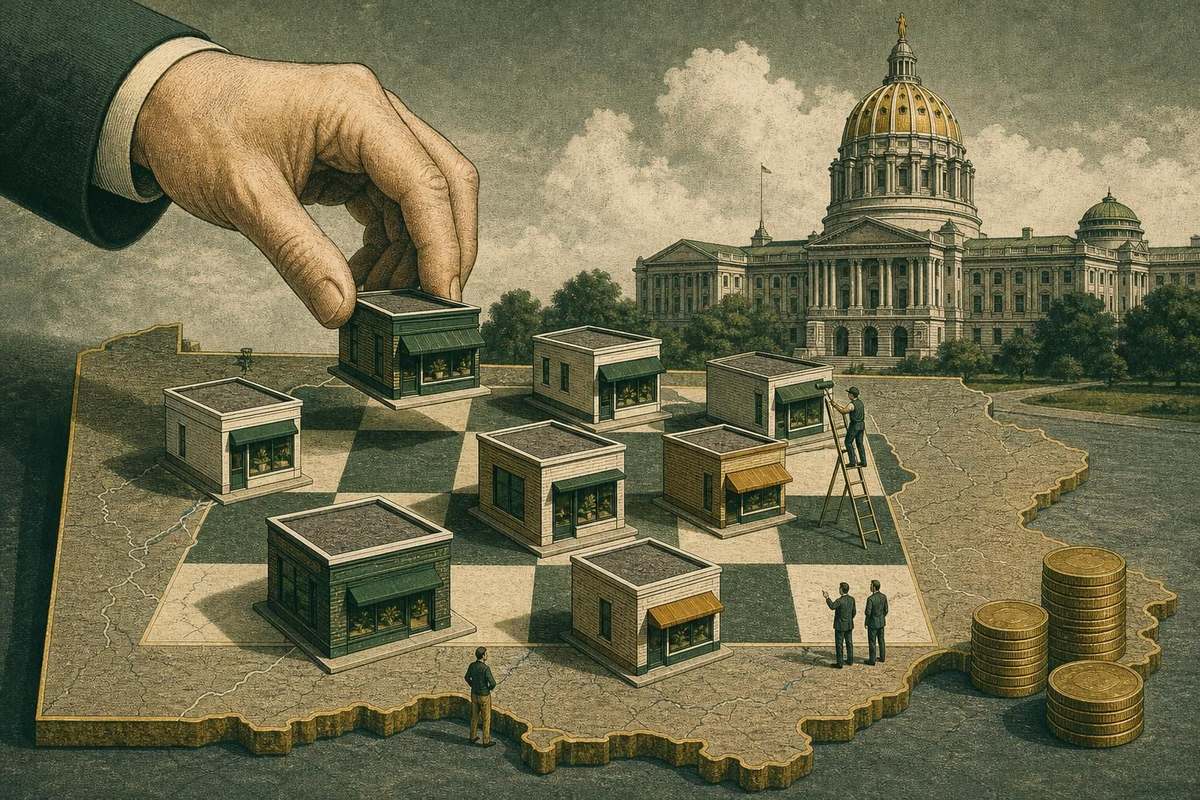
Cresco Paid $46.9 Million for Nine Pennsylvania Stores. Then Pennsylvania Flipped Its Senate
Cresco announced the PharmaCann deal as $50 million; its Nov. 6 filing books $25.3 million of the final price as permits. On the same day's call, Charlie Bachtell said adult-use odds are meaningfully better, and an analyst asked whether the real holdup was ever Republicans.
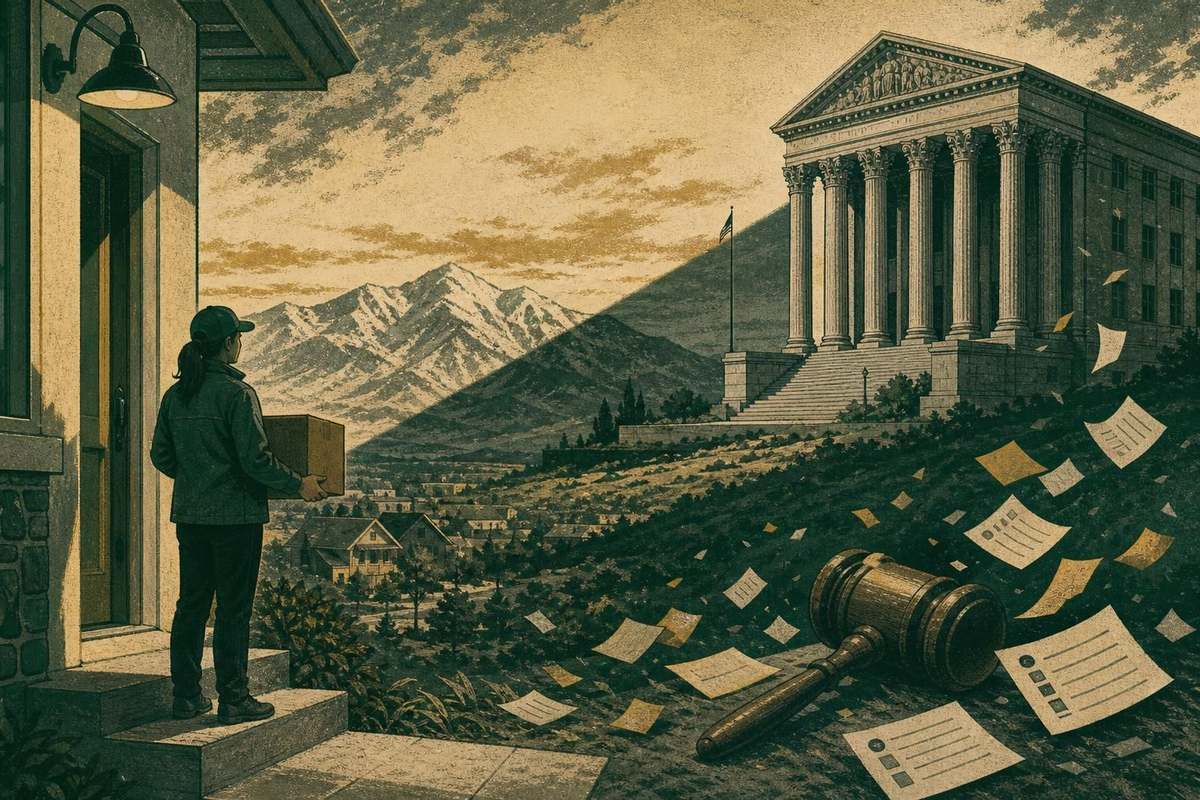
A $120 Delivery Got Her Fired. A Labor Judge Says the Union Was the Real Reason
An NLRB judge ruled Nov. 2 that Utah's The Flower Shop illegally fired three pharmacy workers after a 2024 organizing drive and ordered them reinstated. The company is still arguing in federal court that labor law does not reach an intrastate cannabis business.