Massachusetts Drafts a New Medical Cannabis Market, the One Question 8 Would Leave Standing
Draft rules from the Cannabis Control Commission would let out-of-state patients register, end the requirement that medical dispensaries grow their own supply, and create a dispensing-only license reserved for social equity owners for 24 months. The first vote is set for Dec. 10, five weeks after voters decide.
At 10 a.m. on Thursday, October 22, the Massachusetts Cannabis Control Commission convened over Microsoft Teams with a short agenda. The first item was the release of draft testing regulations. The second carried a dry title, "Discussion of Chapter 65 Fall Regulatory Round," and a few slides into it sat a three-word heading: "Residency Requirement Eliminated." (S1)
Commissioner Xiomara DeLobato explained the idea to the State House News Service afterward in plain terms. "Simply put, it is a really effective way and a thoughtful way for us to give medical patients across the country more access to treatment for any of the reasons that they're using marijuana for medicinal purposes," she said. Under the draft, a person 18 or older from any state who is diagnosed with a debilitating medical condition by a certifying provider in Massachusetts could register as a patient. Commissioners plan an initial vote on December 10. (S2, S3)
The date matters because of the one before it. On November 3, Massachusetts voters decide Question 8, which would repeal the state's adult-use cannabis law and shut down recreational sales. It would leave one thing standing. The petition's first section lists the purpose of "continuing the medical use of marijuana program." So on the eve of a vote that could erase most of the legal market, the commission is redrawing the part of it that would survive. (S4)
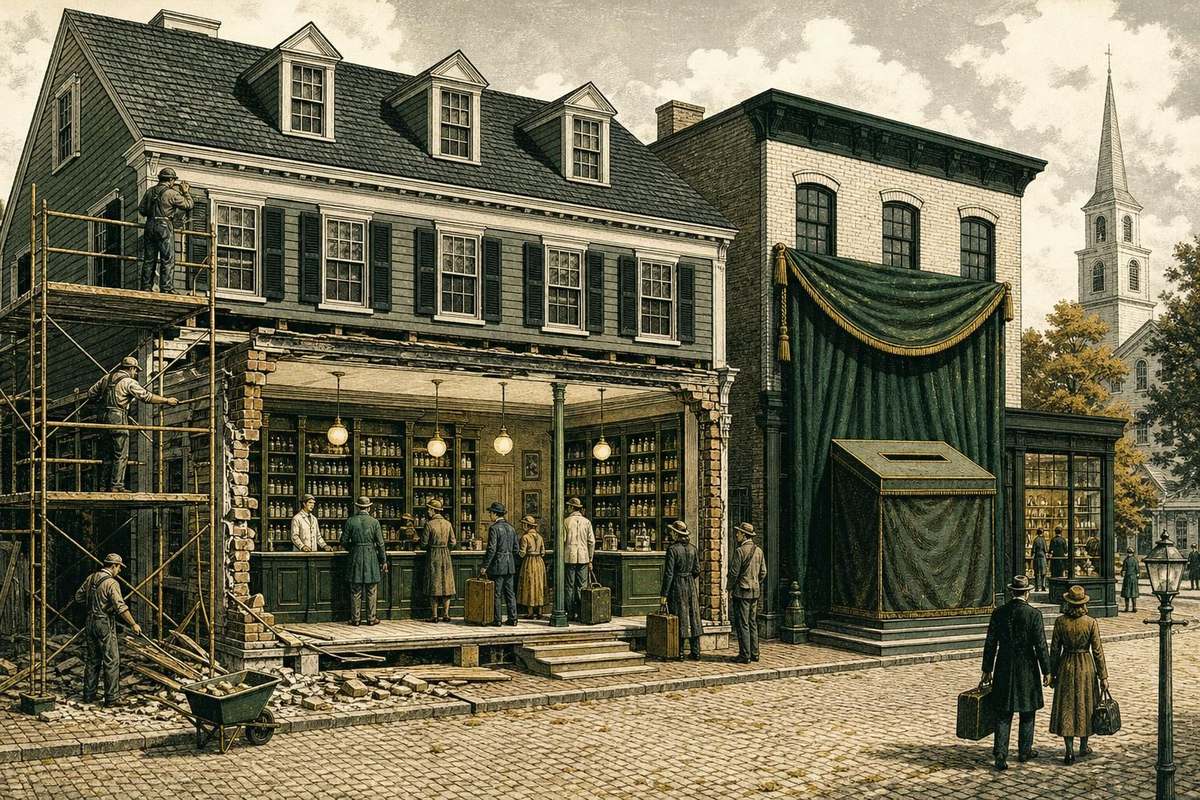
Residency is the headline, but it is the smallest of the changes. The slide deck describes a medical market rebuilt from the ground up. Every existing medical treatment center would be redesignated a fully integrated medical treatment center, or FIMTC, and could choose which of cultivation, manufacturing and dispensing it wanted to keep doing. A new license, the medical marijuana dispensary, or MMD, would let a business buy, store, sell and deliver medical cannabis without growing or making any of it, as a standalone shop or co-located with an adult-use store. Existing operators would get a 36-month pathway to convert into one. (S1)
That ends the rule that a Massachusetts medical dispensary must grow its own supply. The draft also lets adult-use licensees transfer product into the medical system, lets product manufacturers produce above their caps solely for medical sale, gives hospices and long-term care facilities authority to order cannabis for patients, and lets nurse practitioners and physician assistants certify children with life-limiting illnesses. (S1, S5)
Most of this was ordered by the Legislature. In April, Gov. Maura Healey signed Chapter 65 of the Acts of 2026, a rewrite of the state's cannabis laws that shrank the commission from five members to three, all appointed by the governor, and raised the number of adult-use retail licenses one company may hold from three to six. "It's important that we are doing everything we can to make sure this industry is set up for success and that we remain competitive in this fast-growing market," Healey said when she signed it. Sen. Adam Gómez, speaking at the meeting where negotiators finalized the deal, said the bill "recognizes that our cannabis industry has matured and that our regulatory framework must evolve along with it." (S5, S6, S7)
The law's text holds the detail that will decide who actually gets the new licenses. It defines a fully integrated center as an entity licensed to cultivate, manufacture, process and sell medical cannabis, and caps any one owner at three. And under section 61, every medical license that is not a fully integrated center, which in practice means the new dispensing-only MMD, is reserved exclusively for social equity businesses for 24 months from the day the first one is cleared to open. The commission can extend that window if it finds the equity goals have not been met. (S6)
Read against Question 8, the timing looks less like coincidence. The petition does more than spare the medical program. Its section 8 directs the commission to "expedite and streamline" the process for adult-use licensees to get medical licenses and to sell their existing supplies to medical treatment centers. If the measure passes, it takes effect January 1, 2028. A dispensing-only medical license, co-located with an adult-use store and fed by adult-use inventory, is close to the off-ramp the petition describes, and the commission is drafting it whether or not the vote goes that way. (S4, S1)
The medical market it is rebuilding has been shrinking. Year-to-date medical sales to patients and caregivers fell from $17.9 million in September 2023 to $11.2 million in September 2026, according to the News Service's reading of commission data. Patients have reasons to leave. Adult-use purchases carry a 6.25% state sales tax, a 10.75% excise tax and a local tax of up to 3%. Medical purchases carry none, as long as the buyer shows a program card, the Department of Revenue says, but they require a certification, a registration and a renewal that adult-use buyers over 21 skip. (S2, S8)
Jeremiah MacKinnon, president and executive director of the Massachusetts Patient Advocacy Alliance, called the proposal "a step in the right direction to modernize our medical program." He pointed to people who come to Massachusetts hospitals from other states for surgery, or visit family, and want to keep a treatment going. "For the past few years, the medical marijuana market has been struggling, and so to expand the pool of patients that are able to access medical marijuana in the state, I think is a positive thing for the health and long-term stability of the industry," he said. (S2)
“Simply put, it is a really effective way and a thoughtful way for us to give medical patients across the country more access to treatment”
— Xiomara DeLobato, Commissioner, Massachusetts Cannabis Control Commission
Ryan Dominguez, executive director of the Massachusetts Cannabis Coalition, drew the Question 8 connection directly: the rules, he said, would give out-of-state patients a route to products they need in Massachusetts if voters repeal the recreational market next month. Patrick Nestor, a spokesperson for the campaign behind Question 8, declined to comment on the proposal, according to the News Service. (S2)
The campaign's broader case is that the state moved too quickly. "The rollout in Massachusetts seems to have gone too far, too fast," Wendy Wakeman, chair of the Coalition for a Healthy Massachusetts, told Boston.com this month, citing pediatric exposures, impaired driving and the commission's own turmoil. Question 8 was written to that argument: end commercial adult-use sales, keep small-amount possession legal, keep medical. From that vantage, a commission that answers a repeal vote by widening the medical door to anyone in the country with a qualifying diagnosis is making the coalition's point about how far things have gone. (S9, S4)
There is a harder question inside the residency change, and MacKinnon named it without meaning to when he said out-of-state patients could keep accessing cannabis "tax-free." Massachusetts taxes adult-use sales at a combined rate that can reach 20% and medical sales at zero. A visitor who would otherwise pay that rate at a recreational counter could, under the draft, get a Massachusetts certification instead. Lawmakers looked at a version of this and backed away. The Senate approved a measure recognizing other states' patient registrations, the News Service reported, and the provision was dropped in negotiations with the House before Chapter 65 went to Healey. (S2, S8)
The commission's own slides leave other questions open. Staff asked commissioners whether a fully integrated center that can now pick its activities must still perform some minimum number of them, whether security rules and fees should scale with what a licensee actually does, and what it means for a dispensing-only shop to "administer" cannabis, a word in the draft definition nobody has yet defined. The six-license adult-use cap in the same law has drawn its own objections from small businesses worried about consolidation, WBUR reported. (S1, S5)
- Nov. 3, 2026: Massachusetts votes on Question 8, which would end adult-use sales and keep the medical program.
- Nov. 12, 2026: the commission's next public meeting, where the draft testing rules released Oct. 22 are slated for discussion.
- Dec. 10, 2026: commissioners' planned initial vote on the medical regulations, including the residency change.
- Jan. 1 to Feb. 2, 2027: public comment period on the draft, followed by revisions and a final vote.
DeLobato's description of the plan was about patients "across the country," and the draft is written that way: registration based solely on a qualifying condition, open to out-of-state residents, seasonal workers and transient individuals. It is also, by the commission's own account, a rebuilt supply chain, a new class of license, a social equity set-aside and a conversion path for every existing operator. (S1, S2)
The commission will take that up on December 10, five weeks after the vote. If Question 8 fails, commissioners will be modernizing a medical program that sits beside a much larger adult-use market. If it passes, they will be voting on the shape of the only legal cannabis market Massachusetts has left, and the residency line in the slide deck will mean that patients from anywhere in the country can still buy in it.
- [1]S1 Massachusetts Cannabis Control Commission: Public meeting materials packet, Oct. 22, 2026 (agenda and Chapter 65 fall regulatory round slides)
- [2]S2 WBUR / State House News Service: Regulators consider allowing out-of-state medical marijuana users to buy in Mass. (Oct. 27, 2026)
- [3]S3 The Boston Globe / State House News Service: Mass. regulators eye in-state path for out-of-state medical marijuana patients (Oct. 26, 2026)
- [4]S4 Commonwealth of Massachusetts: Initiative petition, An Act to Restore a Sensible Marijuana Policy (Question 8, version B)
- [5]S5 WBUR: What Beacon Hill's marijuana reform deal means for Mass. customers, dispensaries and regulators (Apr. 7, 2026)
- [6]S6 Massachusetts Legislature: Chapter 65 of the Acts of 2026, An Act Modernizing the Commonwealth's Cannabis Laws
- [7]S7 WBUR: Healey signs bill reforming marijuana business governance, sales in Mass. (Apr. 19, 2026)
- [8]S8 Massachusetts Department of Revenue: Marijuana retail taxes FAQs (medical sales not subject to tax)
- [9]S9 Boston.com: What to know about Mass. Ballot Question 8 (Oct. 5, 2026)
- [10]Massachusetts Cannabis Control Commission: Cannabis Control Commission to review draft testing regulations (Oct. 2026)
Comments are open to verified operators. Sign in or create a free account to weigh in.

Cresco Paid $46.9 Million for Nine Pennsylvania Stores. Then Pennsylvania Flipped Its Senate
Cresco announced the PharmaCann deal as $50 million; its Nov. 6 filing books $25.3 million of the final price as permits. On the same day's call, Charlie Bachtell said adult-use odds are meaningfully better, and an analyst asked whether the real holdup was ever Republicans.

A $120 Delivery Got Her Fired. A Labor Judge Says the Union Was the Real Reason
An NLRB judge ruled Nov. 2 that Utah's The Flower Shop illegally fired three pharmacy workers after a 2024 organizing drive and ordered them reinstated. The company is still arguing in federal court that labor law does not reach an intrastate cannabis business.